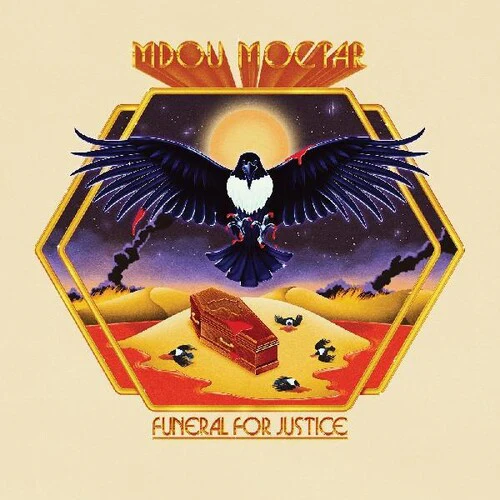
Funeral For Justice
The songs on ‘Funeral For Justice’ speak unflinchingly to the plight of Niger and of the Tuareg people. “This album is really different for me,” explains Moctar, the band’s singer, namesake, and indisputably iconic guitarist. “Now the problems of terrorist violence are more serious in Africa. When the US and Europe came here, they said they’re going to help us, but what we see is really different. They never help us to find a solution.”
“Mdou Moctar has been a strong anti-colonial band ever since I’ve been a part of it,” says producer and bassist Mikey Coltun, who has been playing with Moctar since 2017. On the lead single and title track, Moctar addresses African leaders directly, bidding them: “Retake control of your countries, rich in resources / Build them and quit sleeping”. The song ‘Sousoume Tamacheq’ deals with the plight of the Tuareg people to which the band belong, and who are mainly spread across three countries: Niger, Mali and Algeria.” Oppressed in all three / In addition to lack of unity, ignorance is the third issue.”
Original: $30.00
-65%$30.00
$10.50Product Information
Product Information
Shipping & Returns
Shipping & Returns
Description
The songs on ‘Funeral For Justice’ speak unflinchingly to the plight of Niger and of the Tuareg people. “This album is really different for me,” explains Moctar, the band’s singer, namesake, and indisputably iconic guitarist. “Now the problems of terrorist violence are more serious in Africa. When the US and Europe came here, they said they’re going to help us, but what we see is really different. They never help us to find a solution.”
“Mdou Moctar has been a strong anti-colonial band ever since I’ve been a part of it,” says producer and bassist Mikey Coltun, who has been playing with Moctar since 2017. On the lead single and title track, Moctar addresses African leaders directly, bidding them: “Retake control of your countries, rich in resources / Build them and quit sleeping”. The song ‘Sousoume Tamacheq’ deals with the plight of the Tuareg people to which the band belong, and who are mainly spread across three countries: Niger, Mali and Algeria.” Oppressed in all three / In addition to lack of unity, ignorance is the third issue.”